
National innovator in daylily breeding works quietly in Thetford
Charmaine's hard work paid off, however, and "sculpted" was accepted by ISHS as an official daylily flower form in 2010.
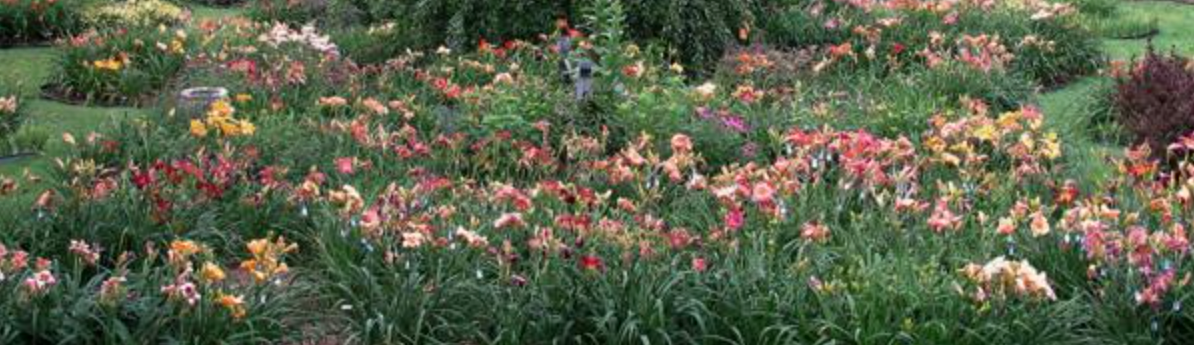
It's easy to miss the small sign "Holdn Heaven Daylily Gardens" on Quail John Road close to the junction with Godfrey Road. Only if one calls to make an appointment in mid to late July to enter the driveway of the modest, one-story home can this horticultural gem of Thetford be discovered.
Artfully concealed from the road lies an astonishing garden bursting with hundreds, if not a couple thousand, varieties of daylilies. These plants are the labor of love of Charmaine Rich who has resided here for 35 years. Her husband Neil is a skilled grader operator with the Thetford highway department. Charmaine is not merely a collector of daylilies, she is a breeder of new varieties.
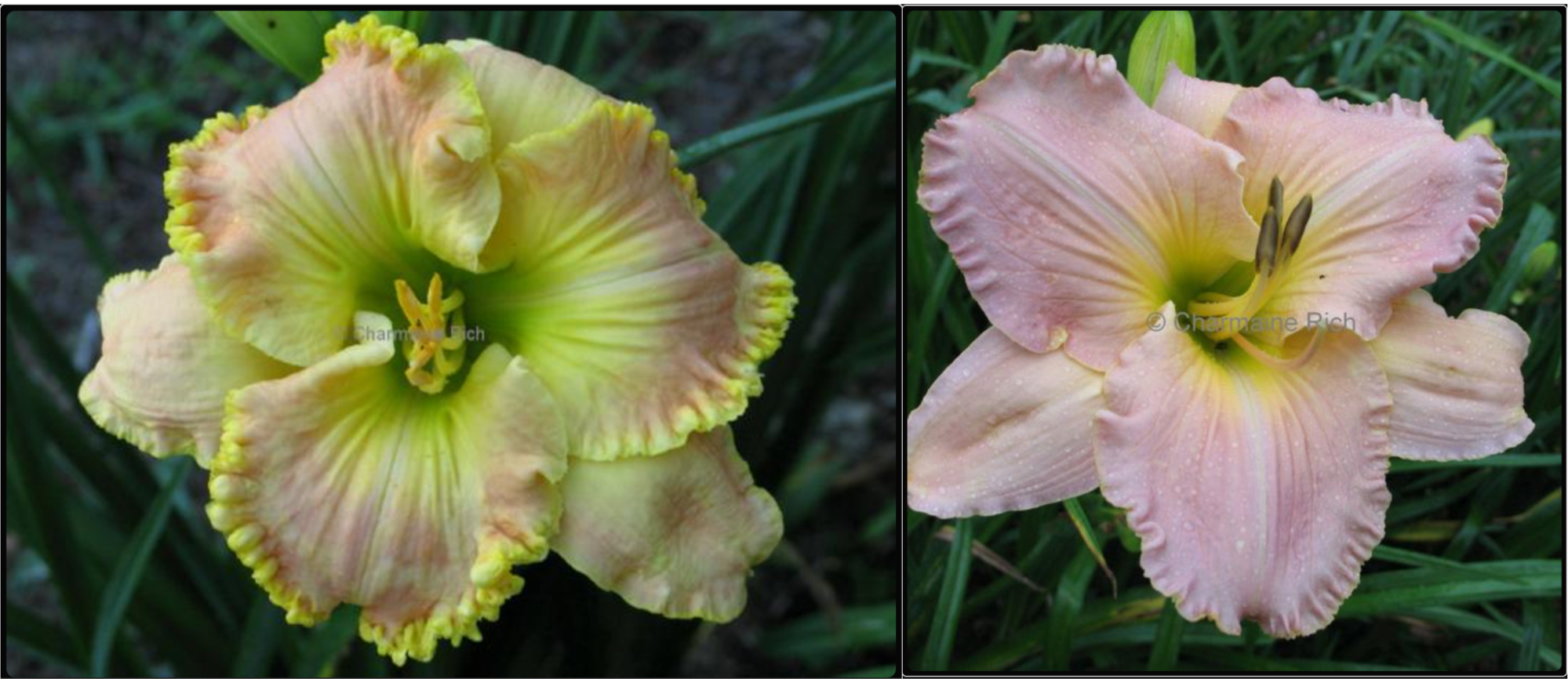
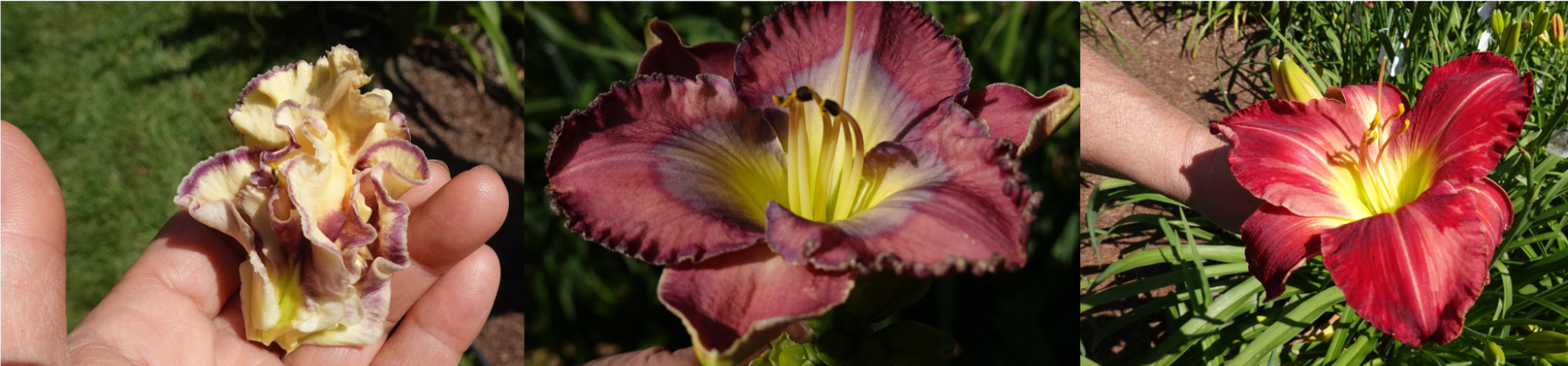
Charmaine's interest in breeding was piqued 25 years ago by her desire for a pink daylily with petals embellished by raised pleats or ridges. In technical daylily language, this is known as a "relief form" from the Latin "revelare" meaning “to raise.” While such features had been noted in occasional tetraploid plants (having twice the normal number of chromosomes), their colors were in the yellow range. In 2008, after several years of labor, Charmaine introduced a pink and yellow relief form daylily, and in 2010 a lovely silvery-pink relief form. As an added bonus, both have appealingly ruffled edges.
The term "introducing" merits some explaining. Introducing a plant variety in horticulture means making a human-bred plant variety available to the wider world, subject to the following criteria: The breeder must ensure it has stable characteristics, must register it under a formal name, and must multiply it so there is a supply available for the public.
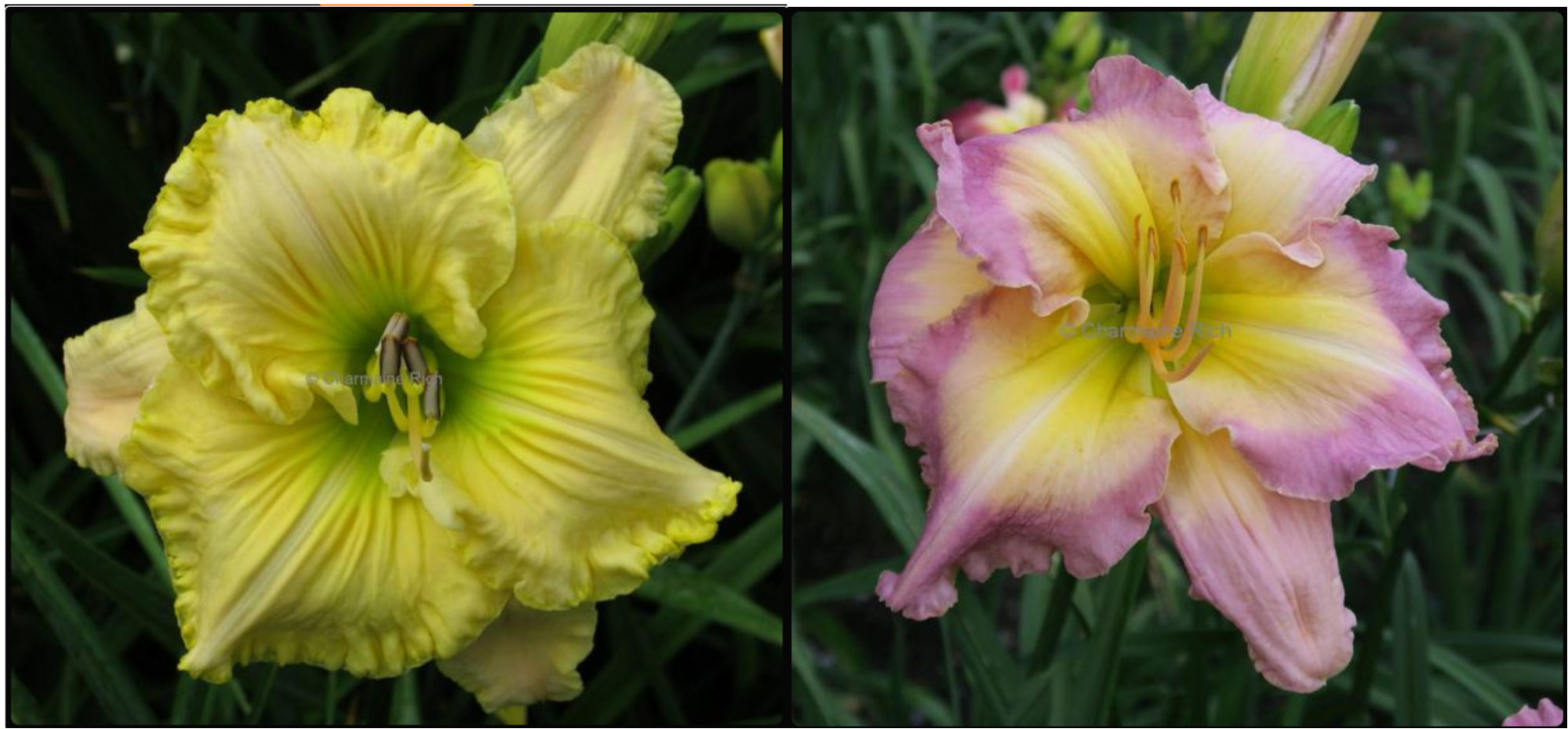
It makes sense that no two registered plants can have the same name. That is the rule of the International Code of Nomenclature for Cultivated Plants (ICNCP), governed by the Royal Horticultural Society of Great Britain. Only plants from the wild may have Latin names; all horticultural plants must be named in modern vernacular languages. Since there are over 105,000 registered names among daylilies alone, the quest for original names has reached creative heights. A pink daylily with a suggestive fold on the back of its petal was registered as "Van Gogh's Ear." Charmaine has been appropriately fanciful. One of her magnificent yellow sculpted and relief daylilies is registered with the name "Through Time and Space," a reflection, no doubt, of the lengthy effort taken to breed it. A favorite of hers is named "Light Between Oceans.” It boasts huge pleated flowers of lavender and cream on tall strong stems.
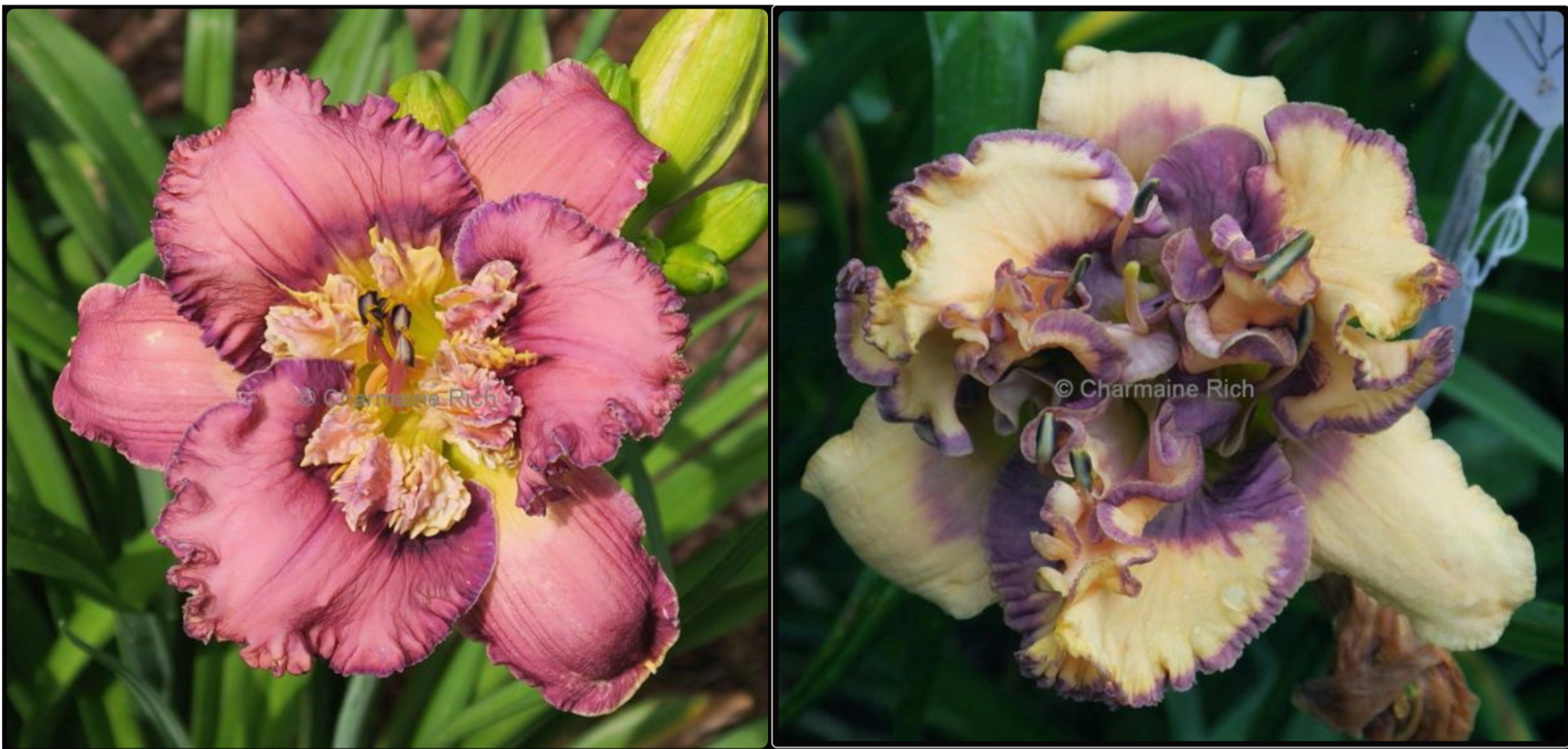
But it was not enough to breed new and unusual flower forms. Charmaine wanted flowers with relief and pleated petals to be recognized as a new, stand-alone flower form, not a mere variant of an existing one. While outwardly unassuming and soft-spoken Charmaine showed a will of iron when it was needed. She doggedly worked with the Scientific Studies Committee of the American Hemerocallis Society (AHS) for two years, writing four articles on the subject, and then another year crafting the official definitions for "sculpted form" daylily flowers, which became the catch-all term covering pleated, relief, and crested (cristate) petalled lilies. (The latter have extra growths of tissue sprouting from their petals.) Even so the AHS was unwilling to accept this new form. Instead they sent her definitions to the International Society for Horticultural Science (ISHS), perhaps in expectation that the prestigious body would reject them. Charmaine's hard work paid off, however, and "sculpted" was accepted by ISHS as an official daylily flower form in 2010. It still met with a lot of resistance, and for the next two years she received almost daily complaints, criticisms and worse by email. For people in certain quarters flowers seem almost a life or death matter.
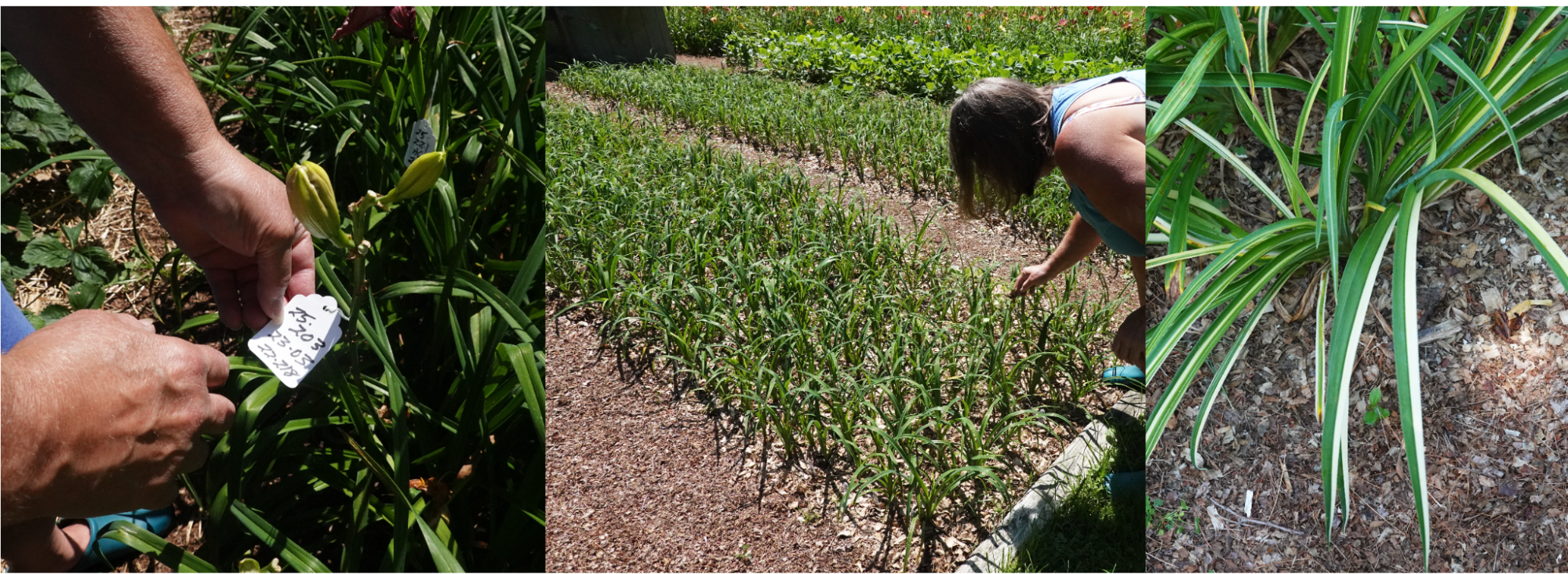
Breeding daylilies is an exercise in patience. In Vermont it takes three to five years to get from a seed to a flowering plant that can be evaluated and registered. A seed harvested last year won't become a blooming plant till next year. Northern breeders are at a disadvantage compared to those in the warmer south where the whole process can take as little as two years. Charmaine's work begins in winter when she assesses the outcomes of crosses she made in the previous two years and plans out what directions to take in the upcoming summer. She makes the planned crosses when the lilies are flowering by hand-pollinating, a delicate and time-consuming task.
A white label is tied to each pollinated flower, recording the date and the unique cross details. The seed pods are harvested when fully mature, the seeds sprouted, and the seedlings nurtured under lights in the spare bedroom till they are ready to be planted out, all the while keeping them identified with their information on that original label. The bookkeeping side of this endeavor is enormous.
In addition to flower form and color, Charmaine breeds for other desirable traits. In particular she selects for those that, unlike most daylilies, open perfectly on mornings that are cold. For a flower that lasts but one day (hence the name daylily), this is an important trait in the north. Her 2026 introduction, appropriately named "Bentley's Snowflakes," is an ivory white with a ruffled yellow edge that does exactly that. It also exhibits another trait that she breeds for, a well- branching flower stalk (scape) allowing for 20 or more flowers. Early-morning bloomers that open fully by 7:00 am are also selected for. (Charmaine is up and patrolling the flower beds by 5:30 am.)
Another intriguing breeding direction she is pursuing is for black flowers on black scapes, something no breeder has produced to date. One of her experiments produced a beautiful, strikingly tall lily with very dark petals embellished with a contrasting yellow center that towered over the other two-year-old seedlings. However, its large flowers were its downfall. Caught by strong winds, the scapes toppled. It did not pass Charmaine's exacting standards that include strong scapes and will not become a new introduction.
Along those lines, Charmaine did produce a lily with wonderful black scapes. But its flowers turned out to be yellow, another disappointing result. However, she points out that if breeding were totally predictable it would be a lot less fun. Other breeding lines include daylilies with green and white variegated foliage. Seedlings from variegated crosses are easy to work with; any with plain green leaves are immediately composted. There’s no need to wait for flowers. Variegated flowers with streaks and patches of different colors are another new breeding trend.
Before daylilies, Charmaine had a background in dairy and horses. After her successful campaign to achieve official recognition for sculpted daylily flowers, she did not leave the AHS Scientific Studies Committee. When asked by the president of the AHS what she would bring from her background to the committee, Charmaine replied, "Just some common sense." She remained on the committee for seven more years.