
Beavers on Thetford’s Godfrey Road lose again
Beavers never give up.
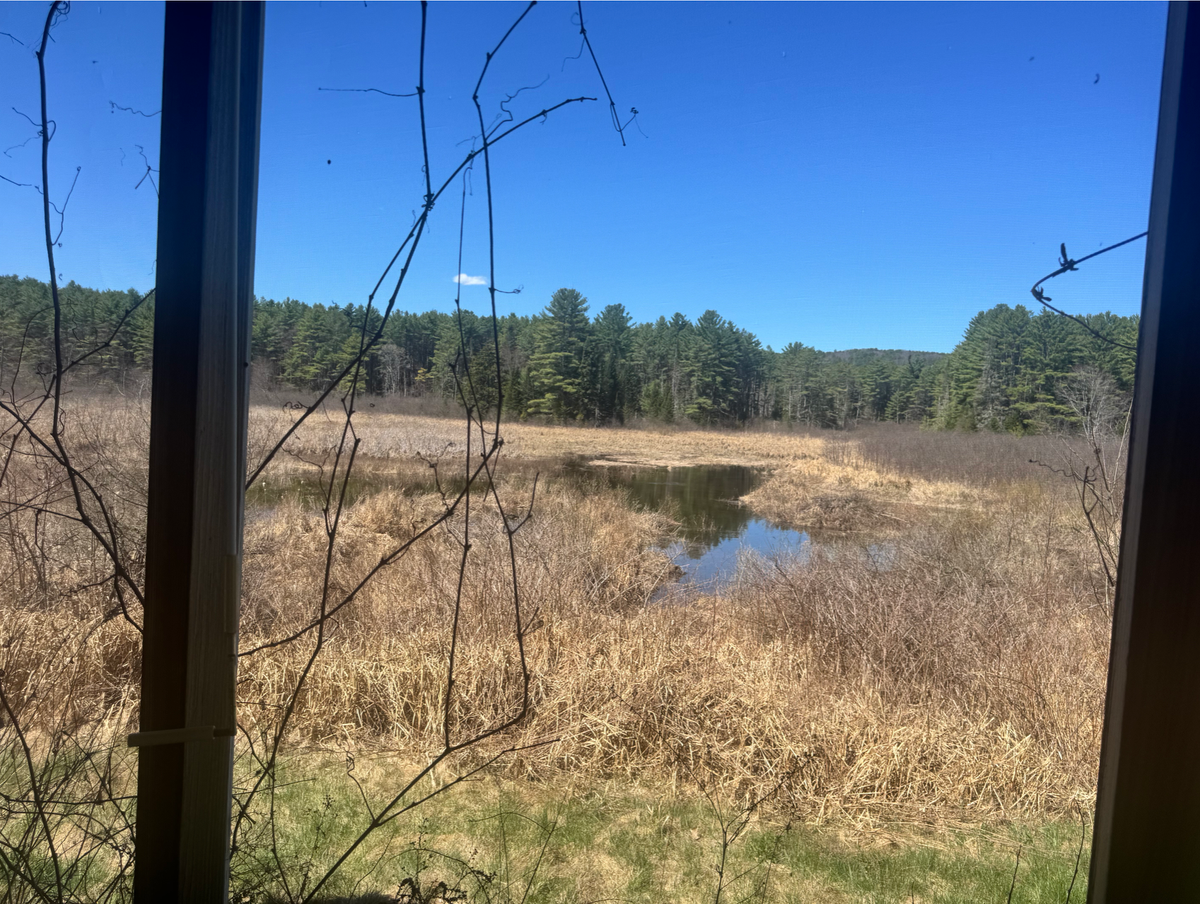
Beavers never give up, which has driven their success in historic times, but in our modern era their persistence can become a death sentence as regrettably illustrated in Thetford.
If we went back in time, we would discover that our modern sense of the North American landscape is a distortion. Before colonization by Europeans, the land was more open, less wooded, and more aquatic than what we see today. This was no accident; it was the work of a vast population of beavers, estimated between 60 million and 400 million animals. They didn't just dam rivers here and there. Every low-lying river was home to huge networks of dams, beaver ponds, and wetlands, built over the last ten or so millennia following the short ice age known as the Younger Dryas. The effect of the huge numbers of beaver wetlands, estimated to have covered over 300,000 square miles, was profound. They retained sediment that over thousands of years filled valleys and created broad alluvial plains. Since beavers never give up and constantly work to repair and improve, their dams can persist for well over 100 years in the right conditions. The world’s largest beaver dam, located in Wood Buffalo National Park, Canada, can even be seen from space.
The beaver wetlands were by no means static. They were expanding systems that encompassed environments of structural complexity, incorporating specialized habitats for a myriad other animal and plant species. Interconnected pools rich with insect life offered breeding habitat to many waterfowl. Birds and bats hunted aerial insects in the open wetland spaces. Amphibians of all types abounded. The deep pools and channels excavated by beavers provided excellent fish habitat, while the retention of sediment allowed for silt-free river beds essential for spawning of salmon and trout.
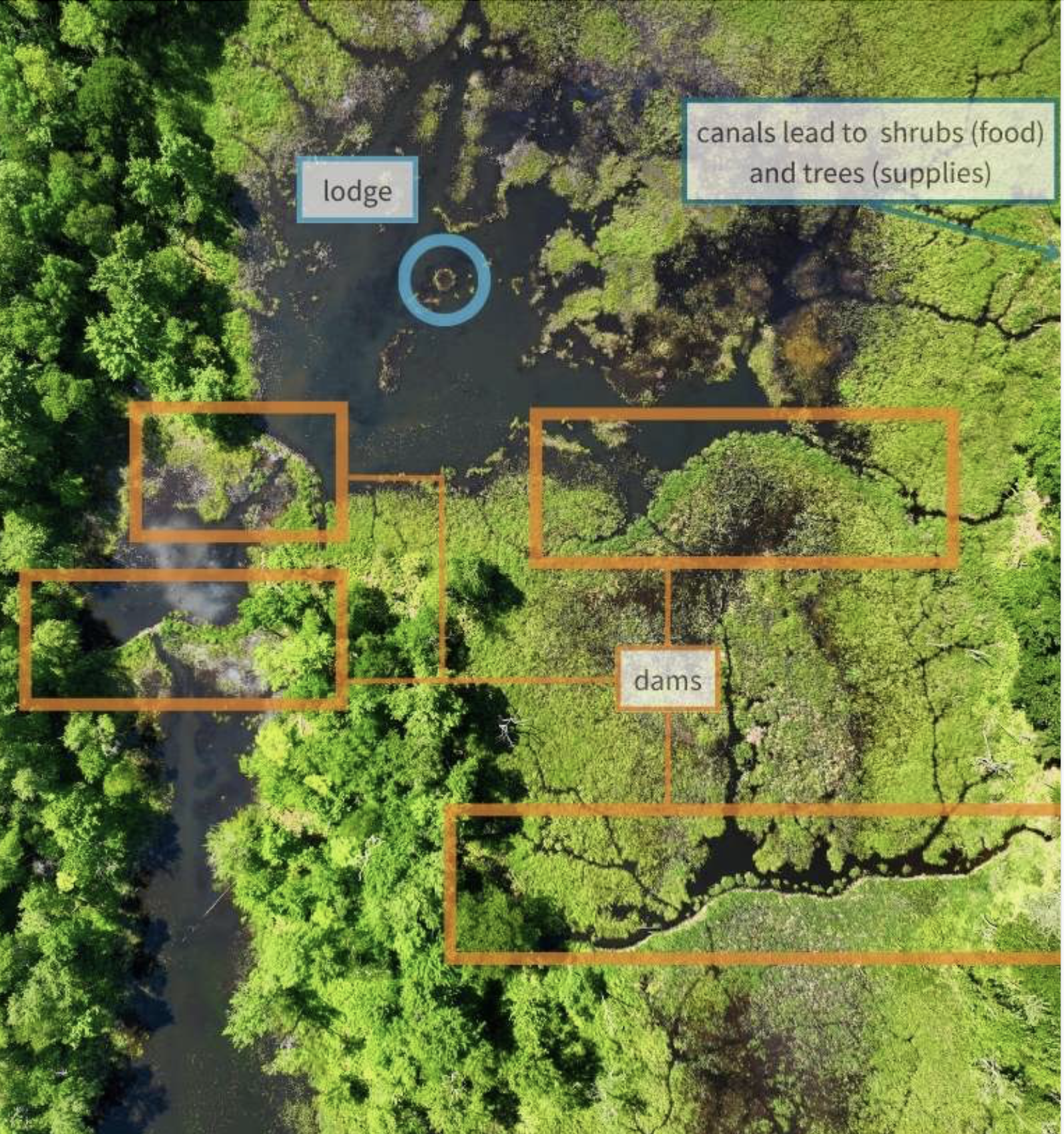
Beaver dams don't completely retain the water. They are inherently leaky, releasing water slowly and naturally and serving to moderate periodic extremes, both high and low, in river flows. The alluvial wetlands, transected by many beaver channels, act as floodplains where excess water can spread, soak in, and replenish groundwater. This tempering of flood action allows important shoreline vegetation to flourish which, in turn, shelters juvenile fish from predators.
This rich and complex world began to unravel when Basque cod fishermen brought indigenous beaver fur robes back to Europe in the 1700s. It was known that beaver fur had superior felting qualities, and beaver hats were the rage, causing the near-extinction of the European beaver. Thus the American beaver fur trade was born. Beavers, with their predictable habits, were easily trapped to the tune of an estimated half a million animals per year. By the early 1900s, the North American beaver population was a shadow of its former glory, a mere 100,000 animals by some accounts.
Environmental fallout ensued as beaver dams disintegrated and wetlands drained. An increased amount of sediment and organic carbon began washing down rivers and offshore from the heyday of fur trapping onward. As water tables dropped, the land became drier. In the west, the salmon population declined steadily along with the beavers.
European settlers came to a land devoid of beavers and proceeded to colonize and farm the rich alluvial plains, also known as beaver meadows. But without beaver dams to moderate extreme river flows, flooding was always an issue. The response was to straighten and channelize rivers to send floodwaters downstream as fast as possible. Now we know that while this approach can help in minor floods, it actually worsens catastrophic flooding. The floodwater, channelized and cut off from its alluvial floodplain where it could have spread out to soak in and slow down, arrives in some luckless downstream community at full force and all at once. Rivers constrained in narrow channels carve vertically downwards, eroding their channels and causing bank collapse.
There has been a change of heart about beavers, starting as early as 1913 when Enos Mills, observed the “services” that beavers provide, including erosion control and sediment trapping, flood reduction, and stream flow equalization at both high and low water. Beavers were re-introduced in New York state and then in Vermont in the 1920s and 1930s. There is also a recent initiative to create human-made "beaver dam analogs" that mimic natural beaver dams with the goal of restoring man-degraded streams, increasing water tables, enriching habitat, and attracting real beavers.
Turning to the microcosm of Thetford, Vermont, one notable beaver wetland has existed for decades on Godfrey Road. In fact, the lush beaver pond was the landscape jewel behind the home of Nora Paley and the reason she chose to settle there. Over the years, she and her children lived close to a wide array of wildlife including beavers, bittern, red wing blackbirds, kingfisher, muskrat, Canada geese, bobcats and bob kittens, black bear, moose, deer, spring peepers, American bullfrog, green frog, leopard frog, grey treefrog, swallows, many songbirds including white throated sparrows and phoebes, great blue heron, Eastern ribbon snake, red-bellied snake, snapping turtle, red fox, mallard, ringneck duck, wood duck, hooded merganser, green winged teal, raccoon, and coyote.
It is an unfortunate fact of life that the colonizers almost always built their roads in the vicinity of streams, rivers, and other waterbodies. Roads attract settlement, and sooner or later beaver-road or beaver-landowner conflicts arise as beavers return to the landscape. Godfrey Road is no exception. Wetlands and streams run nearby, with some streams directed under the road through culverts.
One particular culvert became the focus of a bitter dispute between opposing factions of residents and also the Town. Around 2008, the beavers in the wetland behind Nora's house began building a dam inside the culvert. The Town, of course, wanted none of this; the rising water level was a threat to the integrity of the road. Nora and her companion, Steve Neiderhauser, were desperate to save the beavers from the fate of being trapped or shot. They went to heroic lengths to unblock the culvert daily, but beavers never give up, and every night new sticks were wedged inside the culvert. It was exhausting. Other neighbors were not so supportive, and things grew ugly at times.
The Town initially promised not to harm the beavers and dispatched the road crew to help with the unblocking effort. Unfortunately, a crisis ensued when heavy equipment used to haul out sticks caused the collapse of the rusting culvert. A large steel plate was obtained to cover the hole. Later, a concrete box culvert, which was harder for the beavers to block, was installed. But soon after, one of the beavers was found dead in the culvert. The Town had finally brought in a trapper.
Nevertheless, the pond persisted for years. It finally drained — overnight — in 2025, and with it went all the wildlife. But beavers never give up. This spring, dam building started again, but it was downstream of the culvert and no longer on Nora's property. Water began to back up through the culvert, and the pond started to refill. Efforts to keep the water level in the culvert to a minimum ensued, but it was not to be. While the Town declared it had no jurisdiction because the dam was not within the town road right-of-way, other interests came into play. Nora knew when she saw the truck parked nearby that someone had called a trapper.
Steve reminisced about the flood of July 2017 that hit Thetford hard after five inches of rain in less than 24 hours. He had observed the floodwaters rising to within one inch of the top of the concrete culvert. Were it not for the beaver wetland on the upstream side, retaining and slowing the water, would the culvert have been overwhelmed, even washed out, and the road with it? Alas, we can only guess.